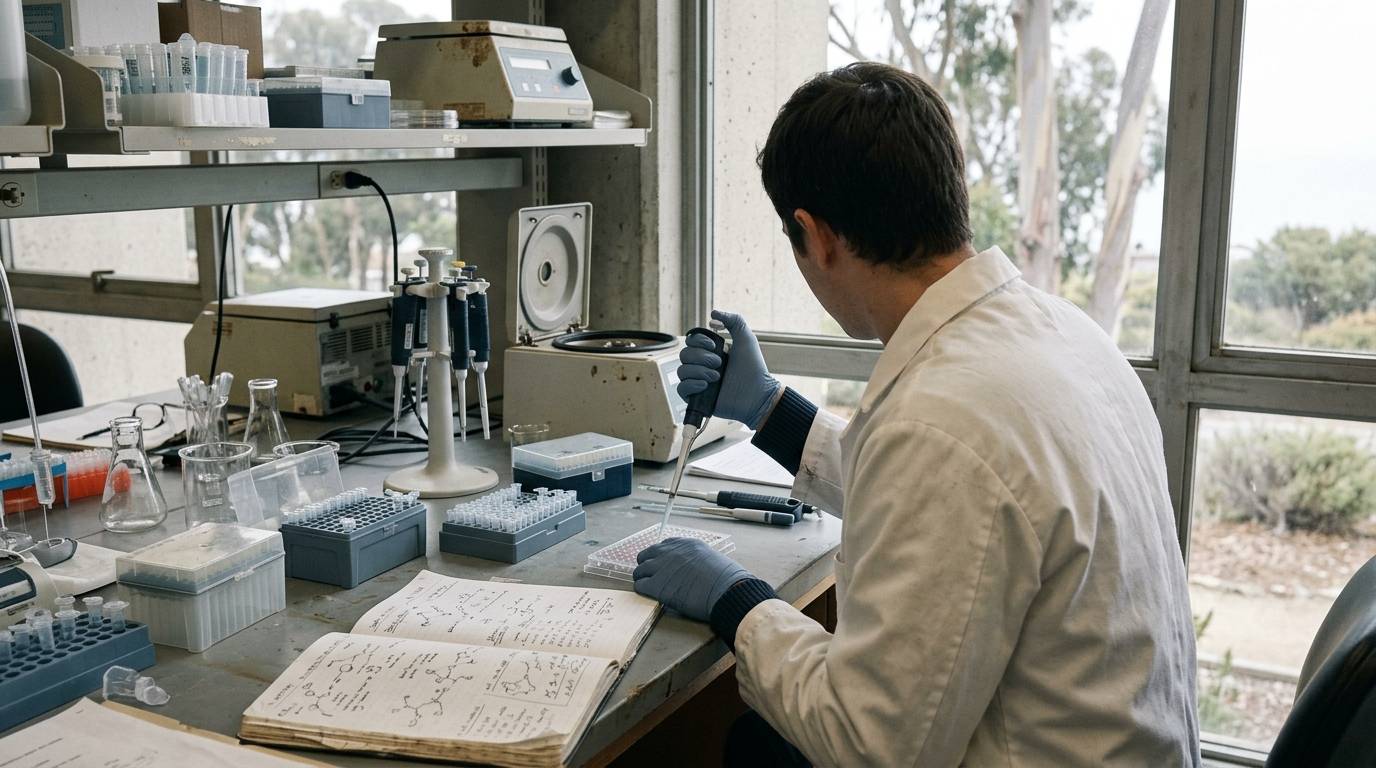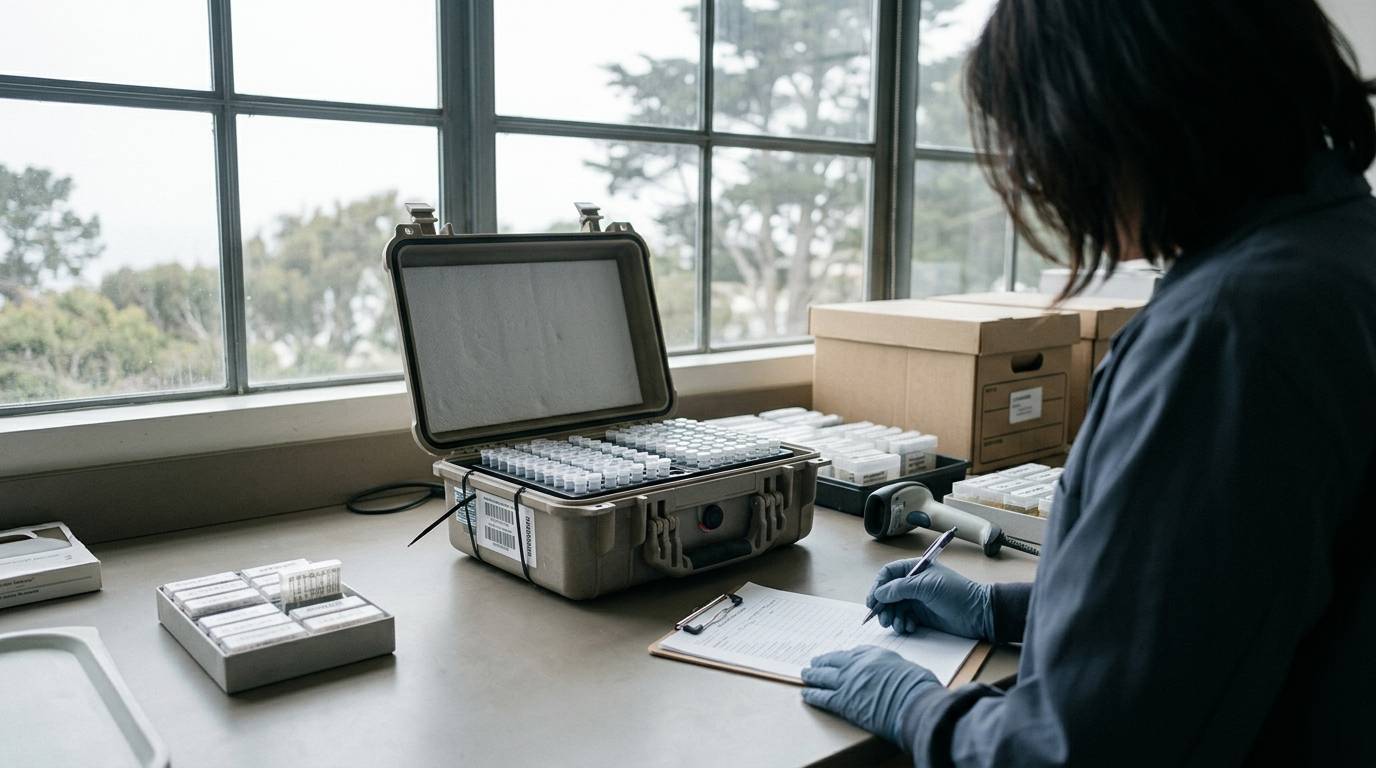
Chain of custody in peptide research refers to the continuous, auditable documentation tracking a sample from receipt and handling to analytical processing and archival storage. It is not an assurance of biological activity, nor does it replace experimental validation. Instead, it provides the procedural foundation required to evaluate whether analytical results reliably reflect the original test article. Without clear custody documentation, researchers cannot determine whether unexpected data stems from biological variation, sample degradation, or cross-contamination.
Traceability bridges physical test articles with their digital datasets. In metabolic research and peptide chemistry, tracking variables such as storage temperatures, lot numbers, and instrument parameters protects reproducibility. The following sections evaluate the evidentiary frameworks, standardized reporting models, and documentation boundaries that govern rigorous peptide workflows.
What Is Chain of Custody in Peptide and Metabolic Research?
Chain of custody establishes an unbroken record of physical custody and experimental custody for laboratory samples. In peptide research, this begins when raw materials or synthesized sequences arrive at the facility. Staff record the lot identifier, date of arrival, physical appearance, and manufacturer specifications into an intake ledger.
This practice also governs metabolic specimens generated during in vitro assays or preclinical animal evaluations. When evaluating tissue homogenates, cellular supernatants, or plasma fractions, researchers must track every downstream aliquot. Detailed records prevent sample misidentification, which remains an underreported driver of non-reproducible research. Understanding these baseline protocols aligns with core research standards across modern chemical laboratories.
Traceability differs from quality verification. A clear custody log demonstrates that a specific vial underwent a designated extraction, but it does not confirm the biological integrity of the sequence. Instead, it ensures that anomalous analytical findings can be investigated methodically rather than dismissed as random error.
What Do Formal Reporting Standards Require for Sample Traceability?
Standardized reporting guidelines define the minimum metadata necessary to make analytical workflows transparent. Because analytical chemistry and metabolomics involve complex sample handling, informal lab notes rarely suffice for independent verification. Consortia of analytical scientists have therefore formalized structured reporting standards.
According to the Metabolomics Standards Initiative chemical analysis paper, minimum reporting standards must cover specific operational categories. These core areas include sample preparation, experimental analysis, quality control, metabolite identification, and data preprocessing. Documenting each tier allows outside investigators to inspect the precise analytical conditions used to generate a given dataset.
Subsequent reviews of metadata standards highlight the ISA-Tab framework as an effective tool for managing experimental complexity. Literature on metabolomics metadata indicates that ISA-Tab structures information across experimental design, applied protocols, sample characteristics, and experimental factors. It also documents associations between physical samples and raw data files. Linking physical materials to computational files ensures that data points trace back to a verifiable specimen.
How Do Standardized Frameworks Structure Analytical Workflows?
Implementing formal reporting models creates a systematic record across each phase of peptide analysis. By applying minimum reporting criteria, investigators document every step of sample preparation and instrument operation. This structure prevents critical operational parameters from being lost between sample intake and final publication.
Sample Preparation and Handling Records
Sample preparation introduces significant chemical variability if solvent purity, dissolution temperature, or reconstitution steps fluctuate. The Metabolomics Standards Initiative outlines that sample preparation details form an essential part of chemical analysis reporting. Laboratory personnel must record the exact reconstitution buffers, dilution series, and reconstitution volumes.
Peptide sequences are vulnerable to enzymatic degradation, surface adsorption, and aggregation. Tracking physical container types, freeze-thaw cycles, and temporary storage conditions ensures that degradation artifacts are not mistaken for novel compounds. Documenting these steps provides the technical context needed when reviewing peptide research articles and evaluating study reproducibility.
Experimental Analysis and Quality Control
Instrumental data collection requires comprehensive documentation of instrument configurations and operating environments. The Metabolomics Standards Initiative framework specifies that experimental analysis and quality control procedures must be recorded as minimum reporting requirements. In chromatography and mass spectrometry, operators log column chemistries, mobile phase gradients, flow rates, and detector calibrations.
Quality control samples, such as solvent blanks and pooled reference materials, must be embedded across the analytical sequence. These controls verify that instrument drift or column carryover did not distort the analytical readouts. Without documented quality controls, researchers cannot confirm whether a detected peak represents an intact peptide or an instrumental artifact.
Identification and Preprocessing Linkage
Data processing steps convert raw detector responses into interpretable tables of chromatographic peaks or spectral masses. Under the Metabolomics Standards Initiative guidelines, reporting standards must incorporate explicit documentation of metabolite identification and data preprocessing. Researchers must record background subtraction parameters, baseline correction algorithms, and alignment thresholds.
The ISA-Tab framework establishes clear links between experimental factors, protocols, and processed outputs. By retaining records of raw files alongside metadata, laboratories make their computational pipelines auditable. This systematic linkage
allows investigators to verify that anomalous data points did not emerge from mathematical artifacts during data transformation.
What Are the Boundaries and Limitations of Traceability Standards?
Reporting standards and metadata models organize experimental variables, but they carry distinct operational limitations. Standardized frameworks like ISA-Tab structure protocols, sample characteristics, and analytical files, but they do not automatically audit procedural execution. A detailed log entry does not guarantee that a technician pipetted an exact volume or that reagents were prepared correctly.
Furthermore, reporting standards define baseline documentation rather than biological validity. The Metabolomics Standards Initiative guidelines describe minimum reporting information for chemical analysis, yet adherence to these minimums does not validate experimental conclusions. Conforming to reporting criteria simply means the workflow is inspectable, allowing other scientists to critically evaluate potential methodological errors.
Preclinical and laboratory-scale studies also face software and implementation barriers. Translating raw analytical steps into complex tab-delimited structures requires specialized data management tools and dedicated personnel. When laboratories adopt standardized models partially, documentation gaps can persist between wet-lab handling and computational processing. Investigators must carefully read methodological papers using a structured guide to reading research to verify whether data linkage was fully maintained.
How Should Laboratories Interpret Certificates of Analysis Within Custody Records?
A Certificate of Analysis provides an essential starting record for laboratory intake, but its evidentiary scope is strictly bounded. A standard analytical sheet documents only the specific sample submitted for testing, using the specific analytical methods reported by the analyst. It confirms the identity and purity observed for that discrete test aliquot at that single moment.
A test report does not guarantee the consistency of untested production runs, nor does it guarantee material stability after shipping. Environmental stress during transit can induce chemical oxidation or peptide aggregation that will not appear on a prior analytical certificate. Reviewing guidelines on verifying peptide purity and identity in laboratory test records helps clarify what a test report can objectively demonstrate.
Similarly, an analytical document cannot demonstrate biological activity, safety, or suitability for complex biological models. A documented high-purity peak confirms chemical presence, but it provides no evidence regarding cellular absorption or receptor interaction. Laboratories must also evaluate how researchers assess peptide quantities and chromatographic metrics when establishing sample concentration. Researchers should incorporate analytical certificates into a larger custody file, supplementing intake data with ongoing internal controls. All experimental materials must strictly comply with established research use policy frameworks.
Frequently Asked Questions About Peptide Research Traceability
Does an intake log verify that a peptide sample has not degraded?
An intake log documents transit times, packaging conditions, and lot identifiers, but it cannot measure chemical integrity directly. Verifying whether a peptide has degraded requires independent analytical testing, such as high-performance liquid chromatography or mass spectrometry, run alongside appropriate baseline controls.
How does the ISA-Tab format aid anomalous result investigations?
The ISA-Tab format links experimental factors, protocols, and sample characteristics directly to assay files. If an anomalous peak or outlying data point occurs, investigators can trace the data file back to the specific sample preparation run, instrument batch, and extraction protocol to locate procedural errors.
Why are minimum reporting standards important if experimental protocols vary?
Minimum reporting standards establish consistent transparency across diverse study designs. By documenting sample preparation, experimental analysis, quality control, identification, and preprocessing, researchers ensure that third parties possess sufficient operational detail to inspect, evaluate, or replicate the findings.
Can a Certificate of Analysis substitute for in-house custody documentation?
No, a Certificate of Analysis reflects only the testing of a specific sample under specific laboratory conditions. It does not record subsequent shipment conditions, internal storage histories, freeze-thaw cycles, or laboratory preparation steps performed after the material arrives at the research facility.
Sources
Introducing / CaliLean Field Notes
A little more
perspective.
An editorial letter for curious minds. Thoughtful reading, questions worth keeping and the sources behind them.
Explore Field Notes Join the list for the first edition