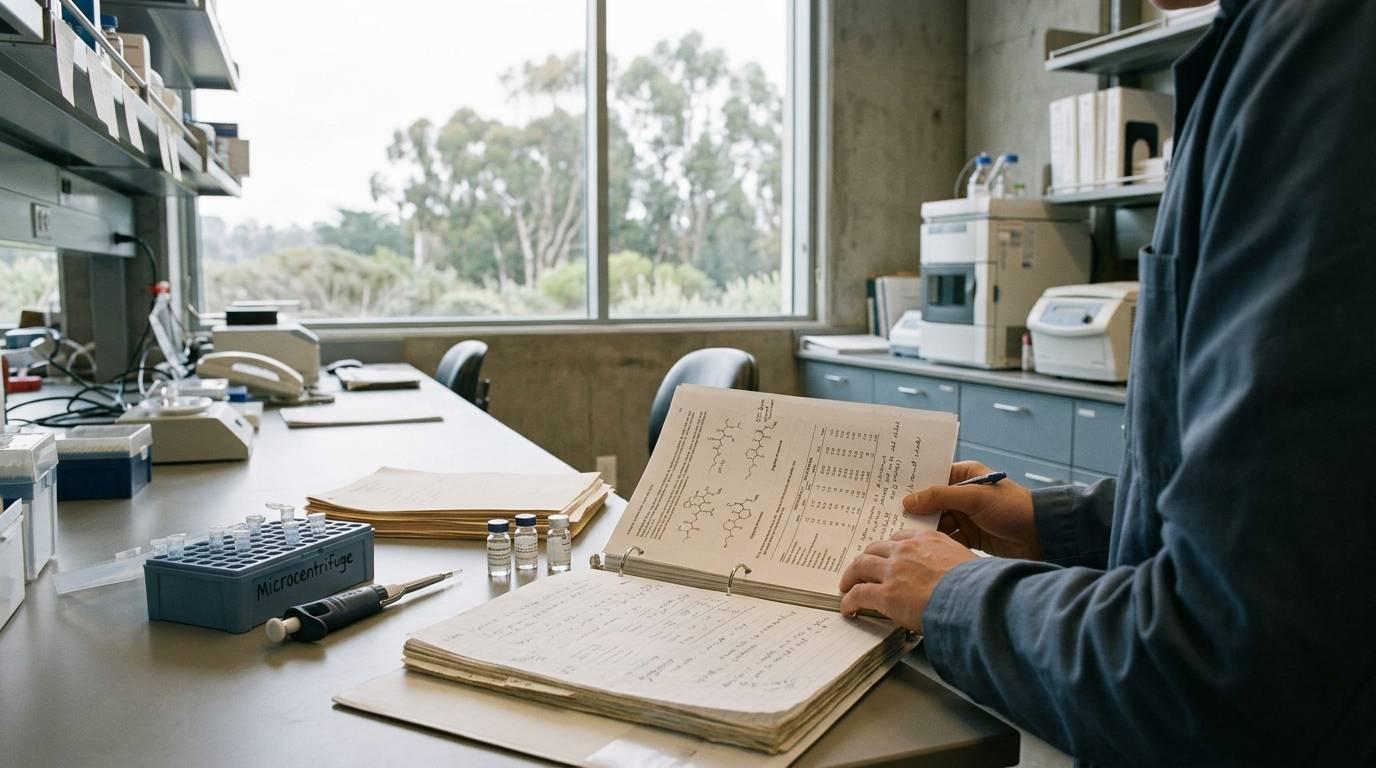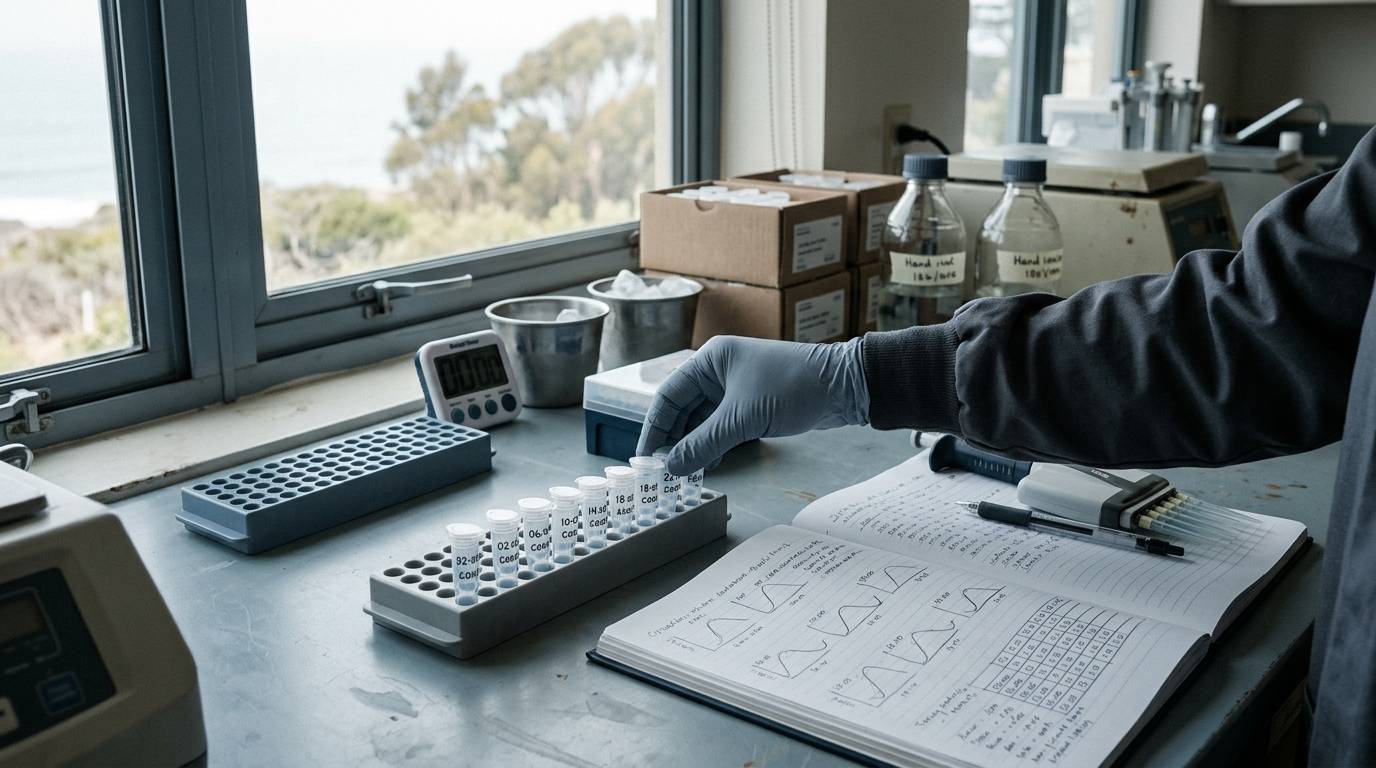
Circadian endocrine research investigates how biological clocks regulate the synthesis, release, and circulating levels of peptide hormones and related signaling molecules. It is not a broad evaluation of subjective rest, nor does it provide personal sleep protocols. Instead, this discipline isolates endogenous twenty-four-hour rhythms from external behavioral changes, light cycles, and sleep stages.
Precise timing protocols are essential for interpreting endocrine data. Without strict sampling schedules, investigators risk mistaking transient sleep-induced pulses for baseline endocrine shifts. Understanding the differences between circadian-driven rhythms and sleep-dependent events requires controlled experimental structures. This guide examines how laboratory sampling designs, sleep alterations, and analytical constraints shape circadian hormone data.
What Is Circadian Hormone Sampling and Why Does Timing Matter?
Circadian hormone sampling refers to serial biological measurements conducted over a defined period to characterize oscillatory release. Biological systems use central and peripheral pacemakers to drive biochemical cycles. Some signaling molecules follow strict endogenous periods generated by the master biological clock. Other factors depend almost entirely on physical rest, body position, or specific sleep architecture.
When research protocols fail to distinguish sleep-dependent events from true circadian rhythms, data interpretation suffers. For example, growth hormone release links closely to slow-wave sleep. If sleep timing shifts, growth hormone secretion generally shifts alongside it. By contrast, true circadian markers maintain their phase regardless of short-term behavioral adjustments. Detailed frameworks in peptide fundamentals and biology emphasize that capturing these physiological pulses requires tight sampling intervals.
How Do Endogenous Rhythms Differ From Sleep-Dependent Signaling?
Distinguishing circadian control from sleep dependency requires challenging the organism with acute schedule disruptions. In controlled research settings, investigators frequently compare continuous nocturnal rest against forced wakefulness. This setup reveals whether a biochemical rhythm persists without sleep, or if the rhythm dissolves when rest is delayed.
In a laboratory investigation evaluating these dynamics, researchers measured circulating endocrine markers across contrasting nocturnal conditions. The study evaluated uninterrupted sleep alongside a partial sleep restriction condition where participants remained awake until early morning. The resulting endocrine profiles demonstrated a clear divergence in biological control mechanisms.
The study showed that growth hormone release closely mirrored the profile of interleukin-6, an immune signaling peptide linked to sleep onset. When sleep was shifted, both growth hormone and interleukin-6 tracked the altered timing of rest. Conversely, classic markers such as cortisol and melatonin maintained their endogenous rhythm. These markers showed no direct concordance with the timing of sleep, confirming that separate regulatory mechanisms govern rhythmic peptide signaling.
What Study Models Define Sleep and Circadian Research Protocols?
Endocrine investigators rely on distinct human study models to evaluate circadian patterns. The selection of the model directly affects the generalizability and resolution of the resulting data.
Controlled Human Laboratory Trials
Controlled human trials isolate physiological rhythms from confounding daily factors. In a controlled study involving 31 healthy male volunteers, investigators collected blood samples every 30 minutes over two separate nights. One night established baseline parameters during uninterrupted sleep. The second night evaluated partial sleep deprivation, keeping participants awake until 03:00.
High-frequency blood draws across a small, demographically uniform cohort reduce environmental noise. This allows researchers to capture rapid, low-amplitude pulses of peptide hormones. However, these demanding laboratory conditions cannot reflect standard everyday living environments. Evaluating the strength of such trial designs is a central concept in peptide research evidence levels.
Observational Human Community Studies
Observational community models evaluate rhythmic hormone output in natural environments across larger populations. Researchers often evaluate the cortisol awakening response, known as CAR, to measure adrenocortical reactivity immediately after waking.
In an observational study of 133 healthy Korean working adults, researchers gathered saliva samples across two consecutive workdays. The protocol collected specimens at three daily intervals: immediately upon awakening, 30 minutes post-awakening, and at bedtime. This observational model documents real-world endocrine responses across a working population. However, it trades the tight environmental control of a laboratory for practical scale, which introduces behavioral variables.
What Did the Audited Circadian Research Find?
Controlled human data demonstrates that peptide signals and steroid hormones respond differently to acute sleep alterations. The experimental trial of 31 healthy men demonstrated that growth hormone release remained coupled to sleep timing. The immune peptide interleukin-6 mirrored this exact relationship across both uninterrupted and delayed sleep nights.
In contrast, melatonin and cortisol remained bound to internal biological clocks. Even when sleep was delayed until 03:00, cortisol and melatonin did not shift to match the new sleep window. Their secretion followed a preprogrammed schedule rather than behavioral status.
Observational community research shows that waking endocrine responses can be tracked across multi-day ambulatory designs. The investigation of 133 healthy working individuals demonstrated that salivary sampling at awakening, 30 minutes later, and bedtime captures distinct waking variations. Gathering samples over consecutive workdays helps confirm whether an observed dynamic reflects an individual pattern or temporary daily variance. For researchers working across brain and cognitive peptide research, these baseline differences dictate how study timepoints must be scheduled.
What Are the Limitations in Circadian Endocrine Studies?
Circadian research presents significant methodological challenges that can limit how findings are applied. One major limitation stems from demographic restrictions. The controlled 30-minute blood sampling study relied entirely on 31 healthy young men. These findings cannot be automatically extrapolated to women, older adults, or clinical populations with metabolic disorders.
Differences in sex steroids, age-related sleep architecture changes, and chronic stress can alter peptide secretion patterns. Studies that use broader cohorts, such as the 133-person working sample, capture wider demographic diversity but lose experimental control. Participants in ambulatory settings may not strictly adhere to sampling times. A delay of only fifteen minutes in collecting a post-waking sample can significantly distort the measured curve.
Frequency of collection presents another critical constraint. Blood sampling every 30 minutes captures rapid endocrine pulses, but frequent venipuncture can cause physical stress. This procedure may inadvertently alter downstream hormone levels. Conversely, sampling only three times per day misses transient ultradian peaks entirely. Readers learning how to interpret peptide studies must consider whether a study design used sufficient sampling resolution to justify its conclusions.
How Do Analytical Constraints Affect Hormone Interpretation?
Generating reliable circadian data depends on rigorous analytical standards in the laboratory. Peptide hormones circulate at fluctuating picomolar or nanomolar concentrations. They are also structurally fragile and susceptible to rapid enzymatic degradation.
A single laboratory test or Certificate of Analysis verifies compound characteristics only for that specific sample. Analytical documentation confirms sequence identity, purity, or peptide concentration under defined testing conditions. It does not establish biological behavior in an animal model or human subject. Furthermore, test records from one experimental batch do not guarantee identical stability across different storage conditions.
Circadian studies require strict pre-analytical controls. Blood or saliva samples collected at night must be handled under cold conditions and processed rapidly to avoid peptide degradation. If analytical methods vary between morning and evening sample batches, artificial differences can emerge. Validating assays for intra-assay and inter-assay precision is necessary before attributing concentration differences to circadian mechanisms.
Frequently Asked Questions
What is the primary difference between a circadian rhythm and a sleep-dependent rhythm?
A true circadian rhythm is driven by an internal biological clock. It persists across a twenty-four-hour cycle even when behavioral rest or light exposure changes. A sleep-dependent rhythm requires actual physiological rest. Its timing shifts directly whenever sleep onset is moved or delayed.
Why do circadian studies require frequent sampling intervals?
Peptide hormones often release in short, intermittent bursts rather than steady secretions. Infrequent sampling, such as collecting blood once or twice per day, misses these rapid pulses. High-frequency sampling, such as draws every 30 minutes, is necessary to track rapid secretory peaks accurately.
Does a Certificate of Analysis prove the biological stability of a peptide hormone in a trial?
No. A Certificate of Analysis documents only the identity, purity, and composition of a specific sample at the time of testing. It confirms that the laboratory material meets defined chemical criteria. It does not determine how the compound degrades in biological fluids or how it functions in living organisms.
Sources
Introducing / CaliLean Field Notes
A little more
perspective.
An editorial letter for curious minds. Thoughtful reading, questions worth keeping and the sources behind them.
Explore Field Notes Join the list for the first edition